
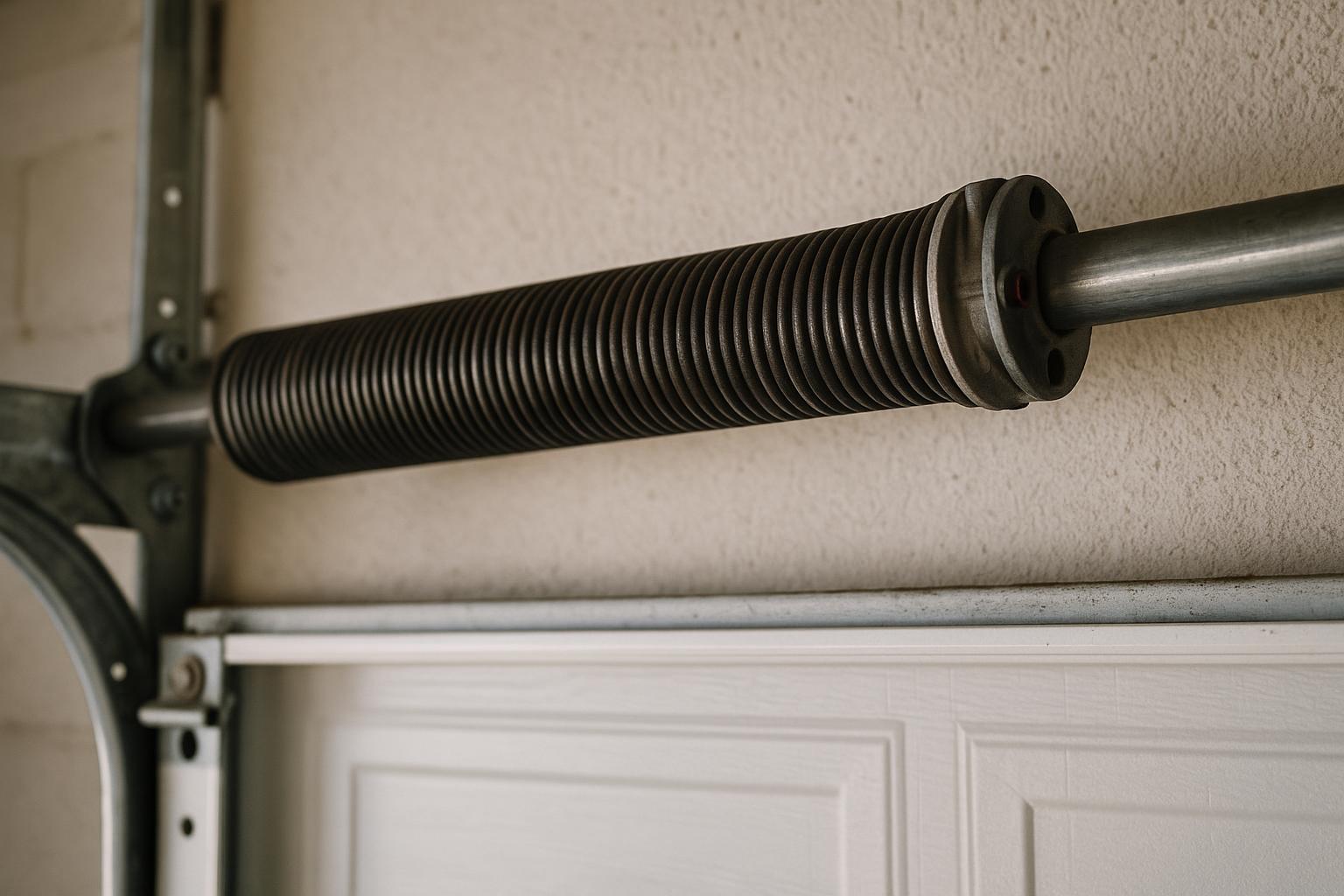
Your Garage Door Springs Are Under More Stress Than You Think
Every time you open and close your garage door, the springs do the heavy lifting — literally. A standard residential garage door can weigh anywhere from 130 to 350 pounds, and the springs are responsible for counterbalancing all of that weight. Over time, the metal fatigues, and eventually, the springs will fail.
For homeowners in Waukesha and the surrounding communities, understanding the warning signs of failing garage door springs can save you from an unexpected breakdown, a safety hazard, or an expensive emergency repair. Here's what to watch for and what to do when you notice something isn't right.
How Long Do Garage Door Springs Last?
Most standard torsion springs are rated for approximately 10,000 cycles. One cycle equals one full open and one full close. If your household opens and closes the garage door four times a day, that's roughly 1,460 cycles per year — meaning your springs could last about seven years under normal use.
However, several factors can shorten that lifespan:
- Extreme temperature swings: Waukesha experiences everything from subzero winters to hot, humid summers. These temperature fluctuations cause the metal to expand and contract repeatedly, accelerating wear.
- Lack of maintenance: Springs that aren't lubricated regularly develop more friction and rust, which weakens them faster.
- Improper installation: If the springs weren't properly sized or installed, they'll wear out much sooner than expected.
- Heavy doors: Thicker insulated doors or solid wood carriage-style doors put more strain on springs than lightweight aluminum models.
7 Warning Signs Your Garage Door Springs Are Failing
1. The Door Feels Heavier Than Usual
Try disconnecting the automatic opener by pulling the emergency release cord, then manually lift the door about halfway. A properly balanced door should stay in place on its own. If it feels extremely heavy or slams down the moment you let go, your springs are losing tension and can no longer support the door's weight.
2. The Door Opens Unevenly or Crooked
If one side of your garage door rises faster than the other, it could mean one of your extension springs is weaker than the other, or one side of a torsion spring system is wearing out faster. A crooked door puts stress on the tracks, rollers, and opener, potentially causing additional damage if left unaddressed.
3. You Hear Loud Squeaking or Grinding
While some noise during operation is normal, loud squeaking, grinding, or popping sounds are not. These noises often indicate that the spring coils are rubbing together due to lost tension or that rust and corrosion have compromised the metal. Don't ignore unusual sounds — they're often the first audible clue that a spring is nearing the end of its life.
4. There's a Visible Gap in the Spring
Take a look at the torsion spring mounted above your garage door. If you see a visible gap or separation between the coils, the spring has already broken. A broken torsion spring will have an obvious gap of one to two inches where the metal has snapped apart. This is the clearest sign that you need immediate replacement.
5. The Opener Struggles or Strains
Your garage door opener is designed to move the door along the track — not to lift the full weight of the door. That's the springs' job. If your opener motor sounds like it's working overtime, running louder than usual, or stopping partway through the cycle, weakened springs may be forcing the opener to compensate for the lost counterbalance. Continuing to use the opener in this condition can burn out the motor.
6. The Door Closes Too Fast
A garage door that slams shut rather than lowering smoothly and steadily is a serious safety concern. This happens when the springs can no longer control the descent of the door. A fast-closing door can damage the bottom panel, crack the floor seal, or — worst case — injure a person or pet standing underneath.
7. You Notice Rust on the Coils
Rust weakens the structural integrity of spring steel. If you see orange or reddish-brown discoloration on your springs, corrosion is eating away at the metal. Rusty springs are more brittle and far more likely to snap without warning. Regular lubrication with a silicone-based garage door spray can slow corrosion, but once rust has taken hold, replacement is usually the safest option.
Can You Replace Garage Door Springs Yourself?
We strongly advise against DIY garage door spring replacement. Torsion springs are under extreme tension — enough force to cause serious injury or even death if handled improperly. Extension springs, while slightly less dangerous, can also cause harm if they snap free during removal.
Professional technicians have the tools, training, and experience to safely remove old springs and install properly sized replacements. At Waukesha Garage Door, our technicians handle spring replacements every day and can typically complete the job in under an hour.
What Happens If You Ignore Failing Springs?
Putting off spring replacement might seem like a way to save money in the short term, but it almost always leads to bigger problems:
- Burned-out opener motor: Replacing an opener is significantly more expensive than replacing springs.
- Damaged panels and tracks: A door that operates off-balance can bend tracks, crack panels, and misalign the entire system.
- Being locked out of your garage: When a spring fully breaks, most doors become too heavy to open manually, and the opener won't be able to lift the door. If your car is inside, you're stuck.
- Safety risks: A door that drops unexpectedly is a hazard to your family, your vehicles, and anything stored near the opening.
How to Extend the Life of Your Garage Door Springs
While springs will eventually wear out no matter what, regular maintenance can help you get the most out of them:
- Lubricate the springs every three to four months with a silicone-based garage door lubricant. Avoid WD-40, which is a solvent, not a lubricant.
- Schedule an annual maintenance inspection. A professional can check spring tension, balance the door, and identify early signs of wear before they become emergencies.
- Keep the door balanced. If you notice the door drifting up or down when left halfway open, call a technician to adjust the spring tension.
- Upgrade to high-cycle springs. If you use your garage door frequently, consider investing in springs rated for 25,000 or even 50,000 cycles. They cost more upfront but last significantly longer.
Waukesha Garage Door Is Here When You Need Us
Whether you've spotted one of the warning signs above or your spring has already snapped, Waukesha Garage Door is ready to help. We serve homeowners throughout Waukesha, Brookfield, New Berlin, Pewaukee, Mukwonago, and Delafield with fast, professional spring replacement and garage door repair services.
Don't wait for a broken spring to leave you stranded. If something doesn't look or sound right with your garage door, give us a call. We'll diagnose the issue, explain your options, and get your door back in safe working order — usually the same day.