
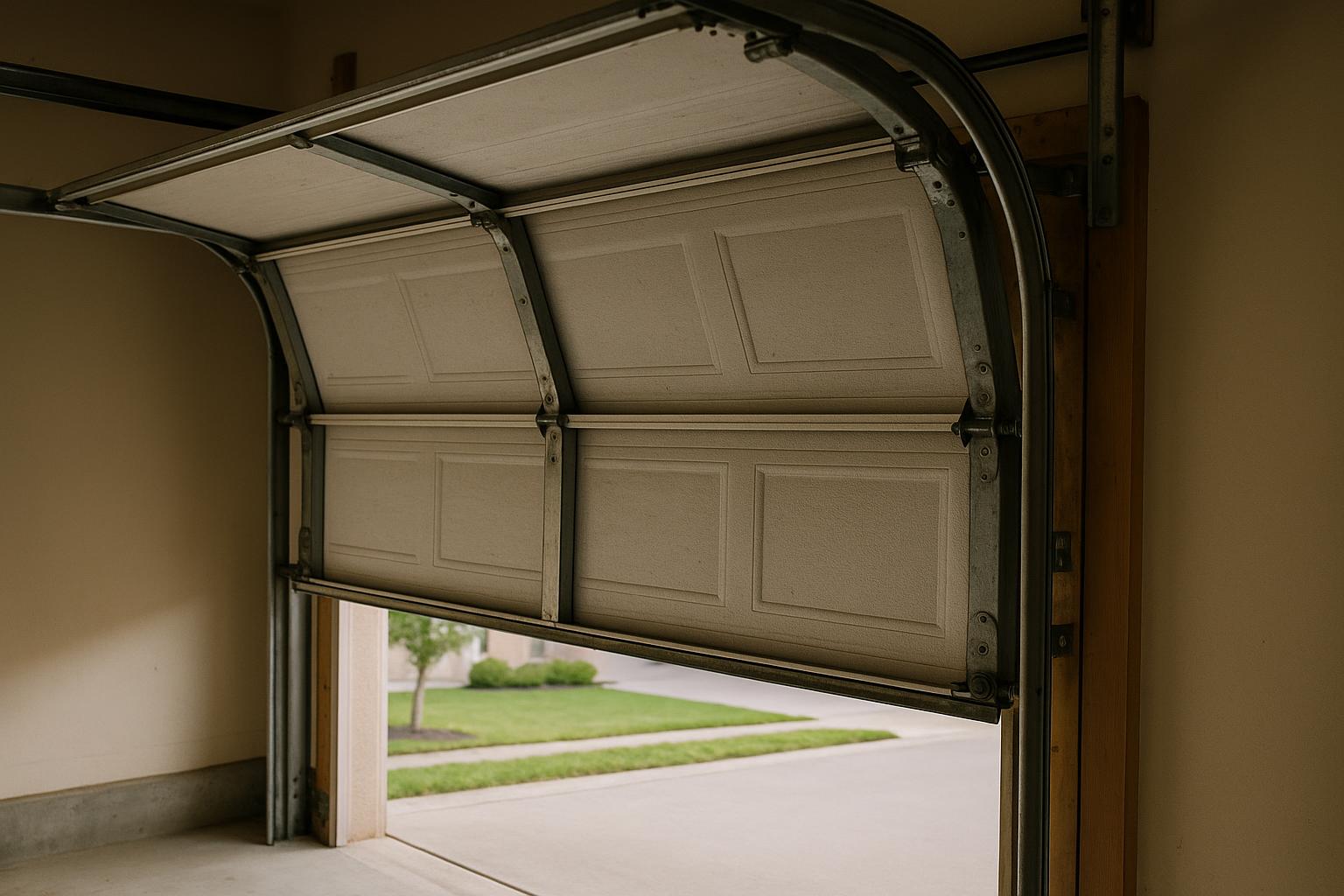
Your Garage Door Shouldn't Sound Like That
You press the button on your garage door opener and instead of a smooth, quiet operation, you're greeted with grinding, squealing, popping, or banging. If your garage door has started making noises that weren't there before, it's trying to tell you something.
Garage doors are mechanical systems with dozens of moving parts, and over time, those parts wear down, loosen, or fall out of alignment. Some noises are minor annoyances with easy fixes. Others are early warnings of a serious problem that could leave your door stuck or even cause a safety hazard.
Here's a breakdown of the most common garage door noises Waukesha homeowners deal with, what causes them, and what you should do about each one.
Squealing or Screeching
A high-pitched squeal or screech when your garage door opens or closes is one of the most common complaints we hear. In most cases, this noise points to one of two issues:
- Lack of lubrication: The rollers, hinges, and tracks need regular lubrication to operate quietly. When metal grinds against metal without proper lubrication, you get that unmistakable screech. A garage-door-specific lubricant applied to the rollers, hinges, springs, and bearing plates can often solve this immediately.
- Worn-out rollers: If your door uses steel rollers, they tend to get noisy as they age. Nylon rollers are significantly quieter and last longer. Replacing old steel rollers with nylon ones is one of the most effective upgrades for reducing garage door noise.
If lubrication doesn't quiet the squeal, it's a good sign the rollers or other hardware need to be inspected and possibly replaced.
Grinding or Scraping
A grinding or scraping noise usually means something is rubbing where it shouldn't be. Common causes include:
- Misaligned tracks: If the vertical or horizontal tracks have shifted even slightly, the door panels or rollers can scrape against the track edges as the door moves. This creates a harsh grinding sound and can cause accelerated wear on both the tracks and the rollers.
- Bent track sections: A track that's been dented or bent—whether from an accidental bump with a car or normal wear—will cause the door to grind as it passes through the damaged area.
- Debris in the tracks: Dirt, leaves, small rocks, or even ice buildup during Waukesha winters can obstruct the tracks and create scraping sounds.
Track issues should be addressed promptly. A door that's struggling to move through damaged or misaligned tracks puts extra strain on the opener and springs, which can lead to more expensive repairs down the road.
Banging or Slamming
If your garage door makes a loud bang or slam—especially when it's closing—there are a few likely culprits:
- Broken or worn torsion spring: Torsion springs counterbalance the weight of the door so it opens and closes in a controlled manner. When a spring is weakening or has already broken, the door can drop faster than it should, creating a loud bang when it hits the ground.
- Opener issues: If the force settings on your garage door opener are off, the door may slam down instead of lowering gently. This is sometimes an easy adjustment, but it can also indicate that the opener is struggling with a door that's become harder to lift due to spring or balance problems.
- Loose hardware: Over time, the constant vibration of the door opening and closing can loosen nuts, bolts, and brackets. A loose hinge or bracket can create a banging noise with every cycle.
A door that slams shut is more than just noisy—it's a safety concern, especially if you have children or pets. If you're hearing banging, it's worth having a technician take a look sooner rather than later.
Rattling or Vibrating
A rattling or vibrating noise often comes from loose components. The garage door system has a lot of hardware—nuts, bolts, screws, hinges, brackets, and chain or belt connections—and any of them can work loose over time.
Start by checking the obvious things:
- Tighten any visibly loose bolts or screws on the door panels, tracks, and brackets.
- Check the chain or belt on your opener. A loose chain will rattle noticeably during operation.
- Inspect the mounting bracket where the opener attaches to the ceiling. If this bracket is loose, the entire opener can vibrate and create noise that reverberates through the garage.
If tightening everything doesn't solve the rattling, the issue may be internal to the opener itself, which typically requires professional diagnosis.
Popping or Clicking
A popping or clicking sound, especially when the door first starts to move, often points to:
- Torsion spring issues: As springs age, they can develop rough spots or slight deformities that cause a pop or click as they wind and unwind.
- Dirty or dry hinges: Hinges that haven't been lubricated in a while can click as the door panels flex during movement.
- Stripped opener gears: If the popping is coming from the opener unit itself, it could indicate that the internal gears are worn or stripped. This is especially common in older openers that have been working harder than they should due to a heavy or unbalanced door.
When to DIY and When to Call a Pro
Some garage door noise issues are safe and straightforward to handle yourself:
- Lubrication: Apply a silicone-based or lithium-based garage door lubricant to rollers, hinges, springs, and tracks every six months.
- Tightening hardware: A socket wrench and a few minutes can quiet a rattling door.
- Cleaning tracks: Wipe down the inside of the tracks with a damp cloth to remove debris.
However, some repairs should always be left to a trained technician:
- Spring replacement or adjustment: Torsion springs are under extreme tension and can cause serious injury if handled incorrectly.
- Track realignment: Improperly adjusted tracks can cause the door to come off the tracks entirely.
- Opener repair: Internal gear replacement and force adjustments require knowledge of the specific opener model and its mechanics.
Don't Ignore the Noise
It's easy to tune out a noisy garage door, especially when it still opens and closes. But those sounds are almost always a sign that something is wearing out, and catching it early can save you from a much bigger repair bill later.
If your garage door has developed a new noise that lubrication and tightening can't fix, Waukesha Garage Door can diagnose the problem and get your door running quietly again. We serve homeowners throughout Waukesha, Brookfield, New Berlin, Pewaukee, and the surrounding area with honest assessments and reliable repairs.
Give us a call or reach out online to schedule an inspection. A quiet garage door is a healthy garage door.